

Fluorescent Angiography
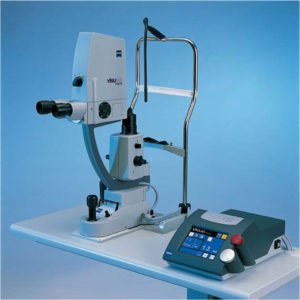
In order to carefully examine the retina (the light-sensitive lining at the back of the eye) and the choroid (the vessels under the retina), your eye doctor uses a diagnostic technique called angiography.
What is Fluorescent Angiography
Fluoroangiography is a well-established diagnostic method for diseases of the back of the eye. Specifically, it is an imaging-diagnostic method used to examine the retina, the vessels of the eye and the optic nerve. o do this, the intravenous administration of a special dye (like a contrast agent), called fluorescein, is necessary. This pigment starts its journey from the vessels of the human body and reaches the vessels of the diseased eye and outlines them. The circulation time of fluorescein from its administration to its appearance at the bottom ranges from 5 to 30 seconds and depends on the heart rate of the patient and on the state of his vessels. In normal situations, the dye circulates only within the vessels. In pathological conditions it is extravasated. At that moment photos are taken continuously (bottom camera). In this way, the patency of the vessels, the speed of blood flow is checked, any leaks are highlighted and pathological vessels are revealed. Diseases such as diabetic retinopathy, age-related macular degeneration, various retinal vascular and neurological diseases can be diagnosed.
What is Digital Fluorescent Angiography
Computers today allow us to have a digital analysis of the examination and so instead of the special camera and film we have more sophisticated recording and imaging machines, a computer and a printer for immediate printing of the photographs. The advantage is that we no longer wait for the appearance of the film, we have an immediate and better analysis of the image and consequently of the damage and we can intervene with the laser if necessary.
How it is done
Initially, eye drops are instilled to open the pupil of the eye (mydriasis). Pupil dilation takes place after 15-30 minutes. A venous catheter is then placed in the patient’s arm and the dye is injected. At the same time, photos are taken continuously for about 5-8 minutes.
When do we do the exam
It is done when a retinal condition is suspected during an eye exam. This examination is also requested when we want to monitor the progress of a disease or the effect of a treatment. The purpose is to know the extent of the damage and the existence or not of pathological neovessels in order to perform laser treatment or not. The patient being tested will have a yellow tinge to their skin from the dye and their urine will be darker for the next 24 hours. This is something that is considered normal and should not worry the examinee. Mild transient upset stomach, in rare cases, allergic reactions to the dye and even more rarely fainting tendencies have been observed. It is contraindicated for people suffering from kidney disease, severe heart disease, liver disease, people with an allergy to contrast agents, etc. What we need to know is that fluorangiography is a very common examination, while complications are rare.
What is needed before the exam
What is needed before the exam
- Fast for at least 6 hours before the test.
- Your pills should be taken as normal with a little water
- Have recent tests: urea, creatinine, glucose, glycated hemoglobin.
- Inform before the examination whether and to which medicines you are allergic
- And what other diseases do you suffer from (arthritis, kidney disease, hypertension, diabetes) etc .