

Keratitis
Inflammation and ulceration of the cornea is called keratitis and is caused by external factors and microorganisms or by systemic diseases.
Herpetic Keratitis
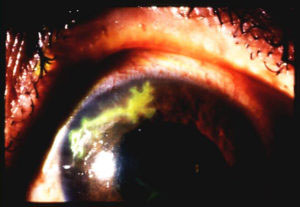 The typical picture of herpetic keratitis is characterized by the existence of a dendritic ulcer, a wound on the surface of the cornea with branches that resemble tree branches. In other cases it can take the form of punctate keratitis with scattered small whitish foci. A reduction in corneal sensitivity is also characteristic. It is not rare that the first contact with the virus occurs during childhood and is asymptomatic. The herpes virus can settle permanently in a nearby part of the nervous system, and during periods when the body’s defenses are weakened, it can migrate to the eye and cause inflammation. Herpetic keratitis often recurs. Repeated attacks create cloudiness in the cornea, which takes the form of a geographical map. The use of topical steroids in an active herpetic ulcer should be avoided, as it leads to worsening of the disease and slower healing. Herpetic keratitis is treated with antiviral agents, which depending on the case are administered locally as eye ointment or systemically in the form of pills.
Adenovirus Keratitis
 Although conjunctivitis from adenoviruses is very common, we rarely have extension of the infection to the cornea. Treatment includes topical steroids, but these should only be used when the possibility of herpetic keratitis has been ruled out.
Fungal Keratitis
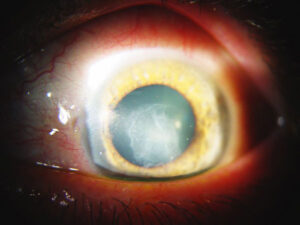 Fungal infection of the cornea usually occurs after injury with plant material, such as a tree branch, thorn, etc. Other factors are the use of contact lenses, immunosuppression from drugs or disease, surgery and the abuse of anesthetic eye drops. The onset of symptoms is slow, with a foreign body sensation, gradually increasing pain and redness. Treatment begins after laboratory confirmation of the responsible microorganism and includes medication and, in some cases, corneal transplantation.
Non-infectious Keratitis
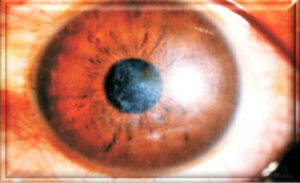 Corneal inflammations can also develop from non-infectious causes, such as various congenital or acquired corneal dystrophies and degenerations, neurotrophic causes, metabolic diseases, toxic agents, drugs, etc. All these conditions must be recognized and treated in time, because in several cases the inflammatory reaction can cause irreversible damage to the cornea and the only solution to restore vision is transplantation (keratoplasty).